
Tote Pool Betting Systems vs Fixed-Odds Bookmakers 2026
 Available in US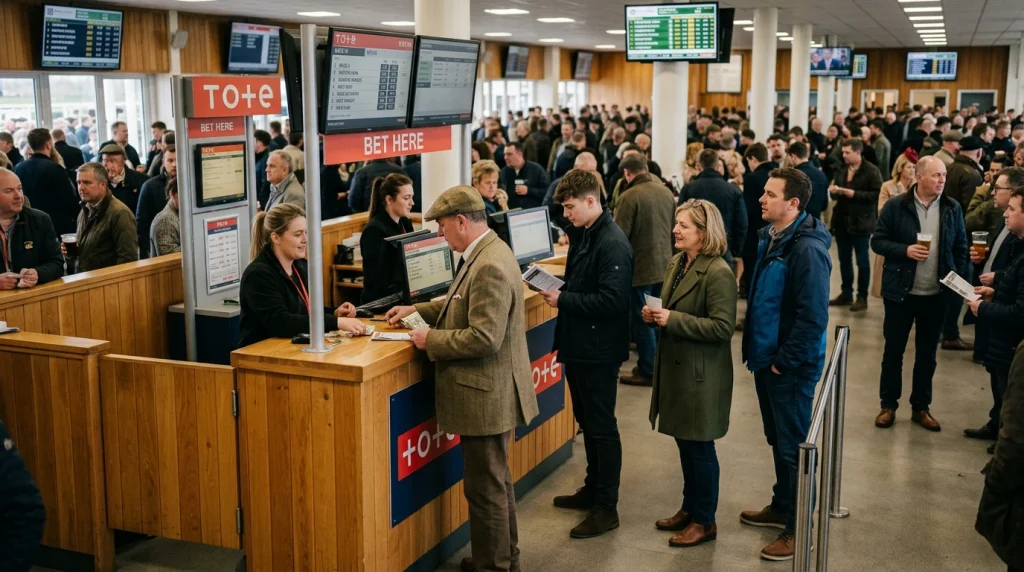
UK Tote Dividends: Comparing Placepot Pool Economics for High Stakes
A horse landed at 14/1 on the bookmakers in the 2023 Cesarewitch. The fixed-odds win bet returned £15,000 on a £1,000 stake. The Tote win dividend on the same horse was £19.40 to a £1 stake. £1,000 on the Tote returned £19,400. My friend backed at 14/1 with three different bookmakers because he wanted to spread the bet across operators. He never checked the Tote price. By the time he realised the pool dividend had paid substantially more than the fixed-odds price, the bet was settled and there was no remedy. £4,000 of value walked away on a single race because he had not bothered to check both pricing structures before placing the stake.
The Tote operates as Britain’s parimutuel pool betting system. Every bet placed into the win pool, place pool, exacta pool or any of the larger pool products is added to a common fund. The pool is divided between the winning tickets after deduction of the operator’s commission. The dividend is therefore set by the distribution of bets in the pool rather than by a bookmaker’s tissue price. The system has been around since 1928 and is now operated commercially by Tote UK Ltd after privatisation in 2011.
The Tote is the third pricing structure available to UK punters alongside fixed-odds bookmakers and betting exchanges. For most races the fixed-odds price is the better value. For specific kinds of horses in specific kinds of races, the Tote dividend is materially better. This piece is the working map of when the difference matters.
Depending on market stability, choosing between starting price versus early price settlement can drastically alter your final payout.
How the Tote dividend is actually calculated
The win pool calculation is the simplest of the Tote products and is the easiest place to understand the mechanics. The total pool is the sum of all win bets placed across the race. The operator deducts a commission – currently 16.5% on the win pool – which leaves the dividend pool. The dividend pool is then divided by the total stake on the winning horse to produce the win dividend per £1 staked.
The arithmetic in plain numbers. Suppose the win pool on a race totals £100,000. The commission deduction at 16.5% removes £16,500, leaving £83,500 in the dividend pool. If £5,000 of bets were placed on the eventual winner, the dividend is £83,500 divided by £5,000, which equals £16.70 per £1 stake. The winning punter who bet £100 on that horse receives £1,670, of which £100 is the original stake – so the net return is £1,570, which is the equivalent of a fixed-odds price of 15.7/1 or decimal 16.70.
The dividend is only known at the moment the pool is finalised, which happens after the race is run. The win dividend is announced on track and through Tote publications a few minutes after the result. Punters who place Tote bets do so on the basis of expected dividends derived from the pool’s pre-race composition, but the actual dividend can move materially in the final minutes before the off as late bets enter the pool.
The pool composition reflects the distribution of punters’ opinions about each horse rather than the bookmaker’s tissue. This is the key feature. If the public concentrates its money on the favourite – often well beyond the favourite’s true probability – the favourite’s dividend will be tight and the dividends on other runners will be loose. If the public ignores a horse the professionals like, the dividend on that horse will be generous beyond what the bookmaker’s fixed-odds price suggests.
Where the Tote pays more than fixed odds
Three patterns produce systematic Tote overlay. The first is small-pool races where a horse goes off at long fixed-odds prices but represents a meaningful share of the pool. Midweek handicaps with total win pools under £20,000 routinely produce Tote dividends materially different from the fixed-odds SP. The dividend pool maths is highly sensitive to the distribution of bets in small pools, and longshot winners can produce dividends substantially larger than the corresponding fixed-odds price.
The second pattern is races where the pool is dominated by recreational money concentrated on favourites. Festival handicaps at Cheltenham, the Grand National, and certain Royal Ascot races attract enormous recreational pools where casual punters back the headline horses heavily. The longshots in those races often produce Tote dividends well above their fixed-odds SP because the recreational money is skewing the pool distribution.
The third pattern is named races with specific Tote promotions. Tote runs structured promotions on certain meetings – sometimes a guaranteed minimum dividend on a named race, sometimes a contribution from the operator that boosts the dividend on specific horses. These promotions occasionally produce Tote prices that are sharply better than fixed-odds for the duration of the named race.
Across UK racing in 2025, against the backdrop of total betting turnover dropping 9% year on year and average turnover per fixture falling 14.4% on core fixtures, the Tote’s share of pool volume has held up relatively well on flagship meetings. The Cheltenham 2026 forecast turnover of roughly £450 million across the four days includes a meaningful pool contribution from Tote-specific products including the Tote Placepot and the Tote Scoop6, which retain a recreational following even as fixed-odds turnover has come under pressure.
The Placepot, Scoop6 and exotic pools
The Tote’s flagship multi-leg products are the Placepot and the Scoop6, and they operate on dividend mechanics quite different from win pools. The Placepot requires the punter to pick a horse that places in each of the first six races at a single meeting. The pool collects bets across all combinations across all six races, and the dividend is divided between the tickets that successfully called all six legs.
The Placepot pool typically runs to between £20,000 and £200,000 per meeting depending on the day’s quality. At Royal Ascot or Cheltenham Festival the pool can exceed £1 million on flagship days. The dividend per £1 ticket can range from a few pounds on a meeting where every leg goes to a favourite to several thousand pounds on a meeting where multiple longshots place across the six races. The probability calculation is genuinely difficult – each leg is independent in form terms but the dividends interact through the pool composition – and most recreational Placepot tickets are negative expected value when commission is factored in.
The Scoop6 is the larger sibling – six selected races across the major weekend meetings, with a pool that often exceeds £1 million and rolls over when nobody wins. Rollover pools have at various times exceeded £20 million when a long string of weekends has produced no winning tickets. The mathematics of the Scoop6 are similar to the Placepot but the variance is dramatically higher.
For serious punters the Scoop6 is occasionally worth playing when the rollover is substantial. The arithmetic is straightforward. If the pool contains £5 million of rollover money and the new bets in the current weekend’s pool total £3 million, a punter who can identify positive expected-value selections across the six legs is playing into a pool where the rollover acts as effectively free money. Whether the value clears the commission and the difficulty of calling six specific results is a separate question, and most weekends the answer is no, but the rollover weeks change the maths meaningfully.
Find daily value and expert breakdowns directly at Stakes Horse Racing Bet.
The exotic pools versus fixed-odds equivalents
For win and place betting, the Tote and the fixed-odds bookmakers are direct competitors. For exotic bets – exactas, trifectas, jackpots and the like – the structures are different. The Tote operates a single national pool with consistent rules. The fixed-odds books operate their own structured exotic bets, each with different rules, different commission and different available markets.
A Tote Exacta is a bet on the first two horses in a specific order. The pool divides among tickets that called both placings correctly. The Tote Trifecta is the same idea for the first three. The Tote Quadpot is a four-leg variant of the Placepot covering races three to six on a meeting card. Each product has its own commission rate, its own pool dynamics and its own probability profile.
The fixed-odds equivalents – Tricast bets at most bookmakers, named-race exotics on certain meetings – typically pay a calculated dividend rather than a pool dividend. The bookmaker’s calculation is derived from the SP prices of the horses involved. The Tote dividend is derived from the pool composition. The two calculations sometimes converge, often diverge, and the difference can be substantial in either direction depending on the specific race.
The professional approach to exotic betting is to compare both structures for any given race and bet whichever is offering the better expected value. Most professionals lean towards the Tote for races with large recreational money pools because the public’s bias toward favourites skews the dividends in favour of longshot exotic combinations. They lean towards fixed-odds for races where the bookmaker’s calculation is structurally more generous, typically smaller meetings where the Tote pool is too thin to produce stable dividends.
The two pricing structures sit alongside the third – the betting exchange – in the modern UK racing landscape. Each has its own strengths and the operational discipline of checking all three for any given race is what separates serious punters from casual ones. The connection to the broader question of pricing efficiency is direct, and how the exchange’s commission structure compares to bookmaker overround determines which venue is the right one for any specific stake.
What commission does the UK Tote take from its win pool?
The Tote takes 16.5% commission on the win pool. The deduction is applied before the dividend is calculated, so the dividend pool is 83.5% of the total stakes placed on the race. The commission rate varies by product – exotic bets and multi-leg products typically carry different commission rates than the win pool.
When is a Tote dividend likely to be better than a fixed-odds SP?
The Tote tends to pay better than fixed-odds SP on longshot winners in races with substantial recreational pool money concentrated on favourites. Big-meeting handicaps, the Grand National, and certain Royal Ascot races routinely produce Tote dividends materially larger than the corresponding SP price for horses that win at double-digit odds.
Articles
Written by the editors at High-Stakes Horse Racing Betting.
