
UK High-Stakes Horse Racing · 2026 Field Guide
UK High Roller Horse Racing Betting: Maximising Large Stakes 2026
 Available in US
UK Each-Way Betting Rules: Real Liability Caps on Large Horse Racing Stakes
The first time I tried to put six grand each-way on a Sandown handicap, the cursor span for nine seconds before the screen told me my stake had been adjusted to £450. Nothing rude, nothing personal — just the quiet maths of a UK book that had decided I was no longer the customer they advertised for. That afternoon set the tone for everything I have learned about high-stakes horse racing betting in Britain over the last nine years: the door is still open, but the hinges are stiffer every season.
British racing is in the middle of a slow contraction that few mainstream guides will tell you about. Year-to-date through the third quarter of 2026, total betting turnover on UK racing is down 4.2% against the previous twelve months and 12.8% against 2023 — and that is before you adjust for the fact that the typical core fixture is now turning over almost 6% less per race than it did a year ago. The numbers I rely on come from the British Horseracing Authority's own quarterly report, not from operator marketing, and they paint a picture that any large-stake punter needs to read clearly: the recreational base is holding up while the bigger accounts are walking away.
That is the world this guide is written for. Not the once-a-year Grand National flutter, not the £5 free bet welcome offer — but the punter who looks at a Saturday card and sees four-figure liability, or the syndicate that needs to clear £20 000 on a champion hurdle market without moving the price against itself. The mechanics are different at this end. Stake factoring kicks in earlier. Best Odds Guaranteed gets quietly capped. Affordability checks land on your inbox after a single triple-figure deposit. Exchange liquidity behaves like a different animal between a Wednesday at Wolverhampton and a Saturday at Newbury.
What this guide assumes about you
You understand basic markets — win, each-way, exotic singles, accumulators. You know what an exchange is. You are sizing real money: enough that a percentage-point swing in commission matters, enough that a bookmaker's "max payout" line in the rules section is something you actually read rather than scroll past. Everything below is built around that reader.
The structure of the guide follows how I think about a Saturday morning: market state first, regulation second, where to get the bet on third, how to size it fourth, where the money concentrates fifth. The data points are real and the operators named are referenced only as facts of the landscape, never as recommendations. I do not run an affiliate book and I do not have favourites. What I do have is nine seasons of being a customer of every major UK firm and most of the exchanges — and a notebook full of the moments where the published rules and the real-world experience parted ways.
The map of high-stakes UK racing in one minute
- UK racing turnover is down 4.2% in 2026 against last year and 12.8% on 2023 — fewer large-staking customers, not lower casual engagement.
- Affordability checks now trigger at £150 of net loss in any thirty-day window; pre-prepared documents turn a 48-hour shutdown into minutes.
- Five flagship meetings hold the high-stakes liquidity: National (around £250M), Cheltenham (forecast £450M), Royal Ascot, Derby weekend, Champions Day.
- Exchanges scale with size where liquidity exists; bookmakers stake-factor winners. Betfair's 20-40% Premium Charge is the biggest tax on edge.
- No staking plan rescues a missing edge.
The line between a punter and a high-roller is drawn by the bookmaker, not by you
I once asked a head of trading at a Gibraltar-licensed firm where their internal definition of "high stakes" sat. He laughed and said: "Whatever the screen rejects." That is closer to the truth than any rulebook will admit. There is no statutory threshold in British racing above which you become a different kind of customer — but there is a behavioural one, and crossing it changes how every other mechanic in this guide applies to you.

The recreational shape of British betting is sharper than most people realise. Among UK adults who bet on horses at all, only 8% spend more than £100 a month on the sport. Once your monthly turnover is into four figures you are already in the top decile of horse-racing punters; once it crosses five figures on a single fixture you are inside a population that operators count individually rather than statistically. That is the practical boundary I work with: not a fixed pound figure, but the point at which a trader knows your account by username when you log in.
High roller — in UK horse racing, a customer whose individual bet sizes and turnover make the operator price-sensitive to the order. The threshold is not a number — it is whatever pulls a human trader into the loop rather than letting the algorithm fill the bet automatically.
Stake factoring — the automated process by which a bookmaker reduces your accepted stake on a given market. Often expressed as a percentage of the requested amount. A 5% factor means a £10 000 request gets matched at £500.
The BHA's own racing report puts the picture as plainly as the industry ever does. In their words: "There are fewer larger staking customers, who have either stopped betting or are placing their bets elsewhere, with these having been only partially replaced by more recreational punters betting in smaller stakes, primarily at the bigger meetings." That sentence is worth reading twice. It is the regulator-adjacent industry body acknowledging, on the record, that the population this guide is written for is shrinking — and that the recreational base is concentrating on the four or five fixtures a year you already know the names of.
One investigation by an independent industry tracker found that a major UK firm accepted pre-match Premier League stakes up to £50 000 on test accounts — yet horse-racing maximums on the same operator vary wildly between Grade 1 weekends and a Tuesday all-weather card.
What this means in practice is that "high-stakes" is not a tier you graduate into by depositing more money. It is a state of being noticed. Once an operator's trading desk has a flag on your account, every other mechanic — Best Odds Guaranteed, withdrawal speed, the rate at which the screen accepts your stake — runs through a different filter than it does for the £10 Lucky 15 player. The published maxima and the effective maxima can sit a long way apart for a flagged account, and the gap between them is mapped in detail in how UK bookmakers actually cap horse racing stakes for high rollers. The rest of this guide is, in a sense, about how to operate inside that filter without breaking the relationship.
The shape of the British betting market is not what the headline numbers suggest
Walk past a high street betting shop on a Saturday morning and you might think nothing has changed since 2015. The window cards still advertise the day's best races, the door still swings, the queue still forms at the counter twenty minutes before the off. The numbers tell a different story — and the difference matters because it is the bigger accounts, not the casual ones, that are leaving.
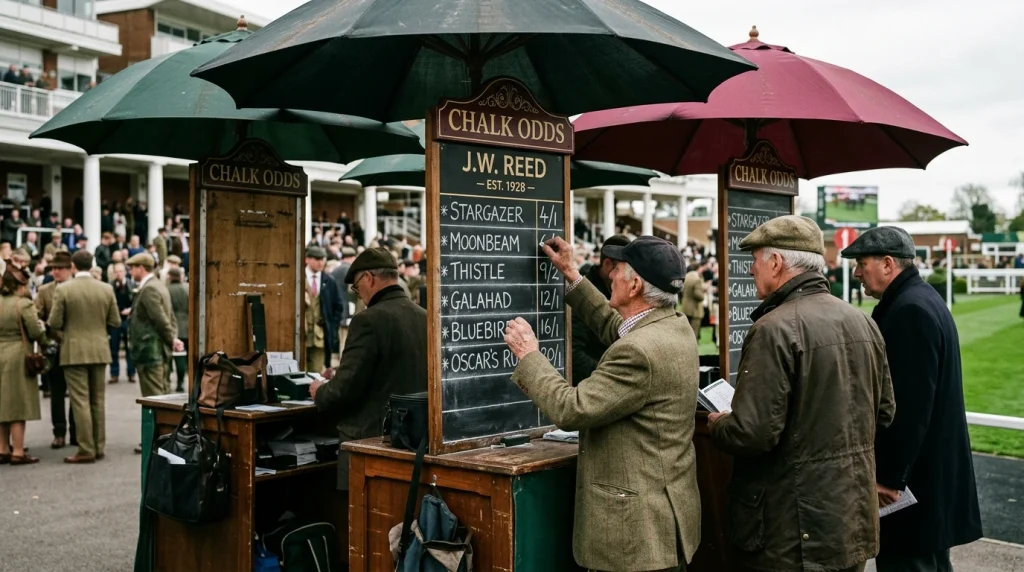
The Gambling Commission's most recent industry statistics put remote betting Gross Gambling Yield at £2.6 billion for the financial year running April 2024 to March 2025. Horse racing's share of that was £766.7 million — the second-largest sport behind football's £1.3 billion. Non-remote betting, the shop estate, came in at £2.5 billion in GGY with marginal growth of 0.7% year-on-year, while the shop count itself fell again to 5 825 — the eleventh consecutive annual decline. The total British gambling industry GGY across all verticals reached £15.6 billion, a figure that is up 3.5% on the previous year and 10.2% above the pre-pandemic 2019-20 baseline.
£766.7M
Remote horse-racing GGY for the financial year to March 2025 — second only to football among UK sports betting.
5 825
UK betting shops open at the end of 2024-25, down by 106 in twelve months and falling for the eleventh year running.
£15.6BN
Total British gambling industry GGY across all verticals in 2024-25, up 3.5% year-on-year and 10.2% on 2019-20.
Read those three figures together and you get the paradox of the current market. The industry is bigger than it has ever been, and yet horse racing's share of it is under pressure from both ends — the casual recreational pound is migrating into football and online slots, while the larger accounts that used to anchor a Saturday racing book are either dormant or operating offshore. The Commission's own quarterly participation surveys put adult horse-racing engagement at 7% during the spring-summer 2025 wave that included the National and Royal Ascot, then back down to 4% across the following quarter. Racing is a peak-driven sport more than ever, and the peaks themselves are getting taller while the valleys deepen.
For a high-stakes punter, the practical implication is liquidity geography. The market still has depth where I need it — on the championship days at Cheltenham, the King George at Kempton, the Saturday handicaps at Newbury and Doncaster, every day of Royal Ascot — but the midweek cards that used to absorb a £2 000 win bet without flinching now react like a stretched balloon. A bet that would have settled at advertised price two years ago will today come back stake-factored or pushed onto an exchange that is already trading thinner than it should be at that time of day. Knowing which fixtures are in which liquidity tier is no longer a nice-to-have. It is the difference between getting your money on at the right price and watching the screen quietly trim it for you.
Affordability checks turned a niche compliance debate into the biggest single force on the market
In August 2024 I lost twenty minutes of a Saturday morning uploading bank statements to a firm I had been a customer of for six years. The trigger was not a five-figure deposit or a suspicious pattern — it was a £520 net loss over the previous thirty days. That was the world the new affordability regime introduced, and the threshold has since moved lower. From February 2025 the trigger sits at £150 of net loss in a rolling thirty-day window, and any large-stake punter who has not already mapped out how they will respond to one of these checks is going to be ambushed by it sooner or later.
Where the rules sit right now
The Gambling Commission requires UK-licensed operators to run a "light touch" financial vulnerability check on any account hitting £150 of net loss over thirty days. A more intrusive "enhanced" assessment kicks in at higher thresholds and can require bank statements, payslips or open banking access. The pilot phase has run on 1.7 million accounts; the Commission's headline figure is that 97% of those checks have come back without friction, with around 530 000 processed through credit reference agencies. The framing of "frictionless" is contested — and it is contested loudest by exactly the customer cohort I write for.
The Betting and Gaming Council estimates that 120 000 UK punters could be obliged to provide documentation under financial risk assessments, and that up to 96 000 of them will refuse — with a sizeable share of those then migrating to the offshore market. The BGC's chief executive Grainne Hurst has been blunt about the mechanics: customers will not stop betting, she has argued, they will simply go elsewhere. The Treasury Office for Budget Responsibility, working from a more conservative model, has nevertheless put a credible number on the migration risk: roughly £500 million of activity may shift to the black market, with knock-on shrinkage to industry GGY of up to a third under the more aggressive policy assumptions.
"I have no doubt the drop in betting revenue was headed by the impact of affordability checks."
— Richard Wayman, Director of Racing, British Horseracing Authority
That single sentence from the BHA's own director of racing is, in my view, the most candid line published by any industry insider in the last two years. It tells you what the regulatory architecture has done to the high-stakes population without dressing the answer in trade-body language. The 9% Q1 2025 turnover drop, the 14.4% average decline on core fixtures, the £3 billion shortfall against the 2022 baseline — none of those numbers exist independently of the checks. They are the checks, expressed in revenue.
What this means for an active punter is straightforward to state and uncomfortable to live with. You will get checked. The check will come at a moment of normal play, not after some red-flag event. The fastest response is to have your documentation ready before the email lands — recent payslips, three months of statements, a clean record of the source of your bank deposits. The slowest response, the one most accounts default to, is to argue the principle and let the friction kill the account. I have done both. Having the documents on a folder ready to upload turns a forty-eight-hour shutdown into a six-minute interruption. For a much fuller treatment of the practical mechanics and the punter's response options, my guide to affordability checks and financial risk assessments walks through the documents, the timeline and the appeal routes in detail.
The fixed-odds versus exchange question is really a question about who absorbs your size
A friend who manages money for a professional syndicate puts it this way: a fixed-odds bookmaker is renting you a price, an exchange is selling you access to other punters' opinions. The rent is cheap when you are small and expensive when you are large. The access is the other way round — you pay a flat percentage commission, but the platform does not care whether you are betting £50 or £50 000 as long as the market matches you.

That is the architecture every high-stakes punter is operating inside. On one side, traditional UK bookmakers offering quoted prices, generous welcome promotions, easy on-course familiarity and a trading desk that will reduce your accepted stake the moment your account starts winning. On the other, exchanges: principally Betfair, which cleared roughly £84 billion of matched volume in 2025 — a figure up around 10% year-on-year — alongside Smarkets and Matchbook, the smaller competitors that survive on lower commission structures and selective liquidity.
| Characteristic | Traditional bookmaker | Betting exchange |
|---|---|---|
| Pricing model | Operator-set odds with built-in margin | Peer-to-peer prices, no operator margin |
| Typical cost on a winning bet | Overround absorbed in the price | 2% to 5% commission on net winnings |
| Premium charges | None — but stake factoring instead | Up to 20-40% on Betfair's most profitable accounts |
| Maximum stake behaviour | Limit set per market, often reduced for winners | Limited only by available matching money |
| Best Odds Guaranteed | Standard, with per-bet caps | Not applicable |
| Liquidity reliability | Consistent within published limits | Varies sharply by meeting and time of day |
The standard commission picture is worth committing to memory because it determines so much of what is profitable at scale. Betfair charges 5% as its base rate, Smarkets sits at 2%, Matchbook also at 2% with periodic 0% promotional windows for selected sports and customers. The catch on Betfair is the Premium Charge, which can lift the effective deduction on the most consistent winners to between 20% and 40% of net profit — a tax on edge that nobody on the recreational tier ever encounters but that becomes the central planning constraint at the top end.
Where do large stakes actually clear fastest? The honest answer is "wherever liquidity is genuinely there, which changes by the hour". A Saturday afternoon at the Cheltenham Festival, you can lay a championship runner for £50 000 on the exchange without moving the market more than a tick. A wet Wednesday at Catterick, the same £50 000 will eat through five price ticks before it fills — assuming it fills at all. The bookmakers are the mirror image: their published "max stake" on a Tuesday handicap might be advertised generously, but the practical limit for a flagged account often sits at a fraction of that, while a Saturday flagship card with heavy public attention often gets matched without challenge. For the deep technical treatment of how Betfair's commission stack and Premium Charge actually behave on a £20 000 lay, I have written a separate working manual: Betfair Premium Charge and exchange liquidity for large stakes.
No staking plan will rescue an edge that does not exist
This is the most important sentence in the section, so I am putting it first. I have seen punters spend weeks fine-tuning a Kelly fraction or building a confidence-weighted percentage model — without ever stress-testing whether their underlying selections are actually beating the market closing price. They are not. The maths of bet sizing only protects you once you have something worth protecting.

An editorial review of independent staking-plan studies that I keep coming back to puts the point as cleanly as I have seen it written: "No staking plan turns a negative-expectation system into a profitable one. What staking plans do is modify the risk profile of a system that already has value. Flat staking and percentage staking survive long-term testing because they protect the bank." That is the entire premise of bankroll work at scale. The plan is a shield, not a sword.
The four families of approach you will actually meet in serious circles are flat stakes (the same pound figure on every bet, regardless of price or confidence), percentage staking (a fixed share of current bankroll on every bet), Kelly criterion in some form (sizing as a function of estimated edge and price), and confidence staking (subjective tiers that the punter sets themselves). The first two age well. The third does what the maths promises if and only if the edge estimates are honest. The fourth is the one I see most professional accounts quietly retire from after their first significant drawdown.
Do
- Cap any single bet at a fixed percentage of current bankroll, recalculated monthly rather than after every win.
- Run any staking plan past a 1 000-bet historical sample of your own selections before you commit live money.
- Treat half-Kelly as the practical ceiling for any system whose edge you cannot estimate to within a percentage point.
- Keep flat-stake and exchange-lay positions strictly separated in your records — they have different risk profiles.
Don't
- Increase stakes during a winning streak by intuition rather than by the rule your plan specifies.
- Confuse confidence with edge — the gut feeling that you "really fancy" a horse is not a quantitative input.
- Apply full Kelly on prices longer than 10/1; the variance penalty is brutal and the edge estimate is almost always overstated.
- Top up the bankroll after a drawdown without reviewing whether the underlying edge has actually held up.
The professional gambler Alex King, in one of the more honest interviews I have read, framed the entry bar bluntly: "I wouldn't recommend professional punting to too many people, unless you have a real flair and/or a huge desire to do it. You have to be able to evaluate a price better than the people setting the odds. You must also have a solid staking plan in place." Both halves of that sentence are non-negotiable. Edge and staking plan together. Either one without the other will lose you money on a long enough horizon.
For the worked detail — flat versus percentage versus full and fractional Kelly on a five and six-figure bank, with the stop-loss rules I actually use — see staking plans that survive a large bankroll.
Five fixtures concentrate the money — and they are not the ones you would guess from the schedule
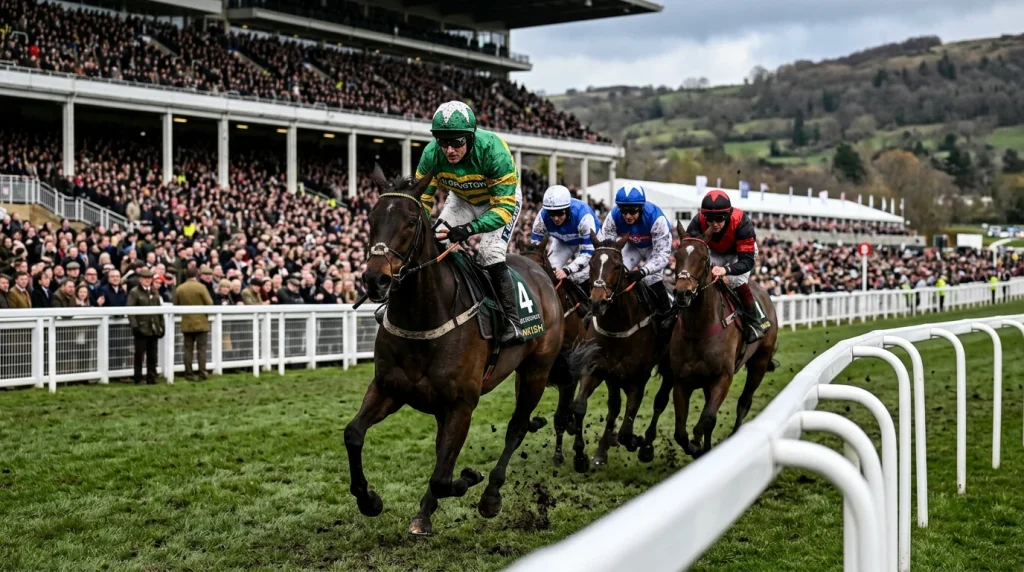
Spread out the British racing calendar and you get north of 1 400 fixtures a year. Five of them — Grand National day, the Cheltenham Festival, Royal Ascot, Derby weekend and Champions Day — between them account for a wildly disproportionate share of total betting turnover. The exact split shifts year to year, but the direction of travel is unmistakable: as core fixtures lose volume, the flagship meetings hold their ground and in some cases grow their share. That is where high-stakes liquidity lives now.
£250M
Estimated total bet on Grand National 2025 — the biggest single gambling event in Britain for the second year running, per operator data.
£450M
Forecast turnover for the four days of the Cheltenham Festival 2026, with all 28 races of 2025 placing in the year's top 31 by stake volume.
£10.65M
Royal Ascot 2026 record prize fund, up from £10 million in 2025 and accompanied by 286 541 attendees across the five days.
The Grand National is the outlier of outliers. Operator data suggests roughly £150 million of the £250 million total in 2025 came from once-a-year bettors — punters who place no other bet on racing for the rest of the calendar. About 30% of Grand National Day customers at one major group either bet for the first time, return after a break, or make their first deposit of the year on that single afternoon. That recreational money is real and it changes the market: liquidity surges on the National book in the final ninety minutes before the off, prices flex in ways they never would on a comparable handicap at Newbury, and the trading desks of every major firm shift staff onto the race for the day.
What the recreational tide gives in volume, it takes away in price sensitivity — and that creates room for the professional money to operate.
Cheltenham is a different animal. The 28 races of Cheltenham 2025 all placed inside the top 31 most-bet British races of the year — there is nothing else in the calendar like that concentration of high-stakes attention across a single week. William Hill's forecast for the 2026 Festival sits at £450 million across the four days. The prize fund is record-breaking too: £4.93 million in total in 2025, with the Gold Cup itself worth £625 000 and the winner taking home £351 687. The volume of professional money in the Festival markets shows up in tighter overrounds, faster-tightening prices in the final hour before each race, and exchange books that match six-figure positions on the championship races without flinching.
Royal Ascot's geometry is different again because it is a flat-racing meeting. The 2026 fixture carries a record £10.65 million prize fund, with the King George VI and Queen Elizabeth Stakes scheduled to become the first £2 million race in Britain in 2027. Attendance at Royal Ascot 2025 grew 4.8% year-on-year to 286 541 — and the on-course betting volume tracks attendance more tightly here than at any other British meeting because the ring still functions as a serious price-discovery venue across the week. The full breakdown of how the money distributes between Aintree, Cheltenham and the other premier fixtures sits in where the money goes at the National and the Festival.
Every Saturday bet helps fund the sport — and the plumbing is older than most punters realise
I asked a friend who has been training jumpers for twenty years where he thinks the money for his prize-money pot comes from. He shrugged and said: "Bookmakers, somehow." That answer is technically correct and practically useless. The mechanism is more specific than that, and it matters because the high-stakes punter who is moved offshore takes their contribution to the sport with them.
The Horserace Betting Levy Board collects a statutory contribution of 10% of operator gross profit on UK horse racing, applied above a threshold of £500 000 of profit per operator per year. That is the legislative architecture. The 2024-25 levy yield was £108.9 million — up from £105.3 million the previous year and the highest figure since the 2017 reform. Add associated interest and the HBLB's total income for the year reached £113 million.
Where the £108.9 million is spent
Roughly £93 million of the 2024-25 levy was pledged toward prize money and regulatory or integrity functions, with around £11 million in fresh grants approved over the period. Reserves grew to £58.7 million by year-end, and the HBLB's projected yield for 2025-26 sits at £103 million — a softening forecast that reflects exactly the turnover pressure I described in the earlier sections of this guide. The plumbing is functioning; the input pressure is dropping.
The practical consequence for a high-stakes punter is one of those facts that hides in plain sight. When you bet £5 000 with a UK-licensed firm and lose, a slice of the operator's resulting profit becomes prize money for the next handicap that horse runs in. When you bet £5 000 with an unlicensed offshore operator and lose, none of that flows back into the sport. The levy is the reason British racing's prize money structure has held up better than the underlying betting market would suggest — but it is also the lever that breaks first if the offshore migration described in the affordability checks discussion accelerates.
The headline figures matter for context here rather than for action. Total British racing prize money in 2025 was a record £194.7 million. The 59 racecourses and their training yards directly employ around 20 000 people, and the industry as a whole supports something north of 85 000 jobs. None of that economic structure is independent of betting turnover — which means that the discipline of a high-stakes punter staying inside the regulated market has consequences beyond their own profit and loss. The plumbing is older than most of the operators that contribute to it, and its long-term yield is now visibly under strain.
The unregulated market has tripled in six years — and the door it left through is the one this guide describes
I have been offered an offshore account three times in the last eighteen months. Once by another punter at a midweek meeting, twice through perfectly polite emails that arrived after I posted a coffee-shop complaint about a stake factoring incident on a public forum. None of those operators are licensed in the UK. All three would happily take £25 000 from me on a Saturday and pay any winnings without a KYC delay. That is the shape of the temptation, and the scale of it is now a regulatory emergency.
H2 Gambling Capital, working from operator data and customer surveys for the Betting and Gaming Council, put the value of bets placed with unlicensed operators serving UK customers at £16.6 billion in 2025. The 2019 baseline was £5 billion. That is more than a tripling in six years, and a doubling in the last two alone. The share of British gambling activity remaining on regulated operators has dropped from 97% in 2019 to 92% in 2025. Offshore GGY across all verticals is now estimated at £685 million annually, up from around £200 million in 2019.
"Billions of pounds are being staked with harmful illegal operators and the black market is growing fast. This is not a future threat, it is already happening."
— Grainne Hurst, Chief Executive, Betting and Gaming Council
The Office for Budget Responsibility's November 2025 modelling suggested that a further round of duty increases could push another £500 million of activity offshore and shrink the regulated industry's GGY by as much as a third. That is the worst-case scenario in the policy spectrum, not the central case — but the fact that it is plausible enough to appear in a Treasury-adjacent forecast tells you something about the elasticity the regulator is currently working against.
The reason the high-stakes population is over-represented in this migration is mechanical, not ideological. A casual punter who deposits £40 a month never trips an affordability check, never gets stake-factored, never spends an afternoon uploading documents. They have no functional reason to look offshore. The customer who bets in four-figure stakes hits every friction surface that the regulated market has introduced — and the unregulated alternative removes all of them at once. The protections lost in that move are real: no Gambling Commission complaints process, no Ombudsman, no dispute resolution route, no guaranteed segregation of customer funds. But the trade-off looks rational on the surface to a punter being squeezed at home, and that surface rationality is exactly why the numbers have grown the way they have.
The Racing Post's own customer surveys have found that around 5% of British horse-racing punters admit to using an offshore operator at some point in the previous twelve months. That is not the headline some readers might expect from the £16.6 billion figure, but the two numbers are reconcilable: a small share of punters are responsible for a large share of the volume, and most of those punters operate at exactly the stake level this guide is written for.
The minute before you click "place bet" is where the largest accounts win or lose their week
One of the most influential lines I have read in the last twelve months came from the Racing Post columnist Martin Dixon, writing about the modern environment for serious bettors. "Flimsy markets, affordability checks and bookmaker restrictions have reduced the volume of opportunities for a successful bettor," he observed, "but I take the view that it's more important than ever to be adaptable with your thinking given the volatility of the markets at different points through the day." That adaptability is procedural, not psychological. It lives in the routine before each individual bet.
The checklist below is the one I actually use. It is not a comprehensive risk model and it does not replace the worked analysis of edge, price and bankroll percentage that the staking-plan section describes. It is the procedural gate that catches the mistakes that good analysis cannot fix once the bet has been placed. Three of the seven items have saved me genuine money in the last twelve months — and the one I skipped on a Tuesday last autumn cost me £4 200 that I should have walked away from.
Before any bet of £1 000 or more
- Confirm the price is at least 5% better than the closing exchange price you would expect on this race shape.
- Check the runner is declared and not the subject of any morning withdrawal speculation.
- Verify whether the operator's Best Odds Guaranteed cap applies to your stake size on this market.
- Confirm the bet does not push your monthly net loss into a new affordability tier.
- Re-read your own staking-plan rule for the day — flat, percentage or Kelly — and apply it to the screen.
- Note the bet in your diary before you confirm it, including your estimated probability and reasoning.
- Pause for thirty seconds after the bet appears in your bet history; you cannot edit it, but you can decide whether to lay it off.
The final item on that list is the one most punters skip and the one I would defend most strongly. The thirty-second pause is not about second-guessing the bet you have already placed. It is about deciding, with the bet behind glass, whether the position you now hold matches the position you intended to hold. About one time in twenty, the answer is no — and that is exactly where the discipline pays for itself.
Questions I am asked most often about high-stakes UK racing
These are the seven questions I get put to me most consistently, in some form, by punters who are sizing up the move from recreational stakes to genuinely meaningful ones. The answers are short because the detailed treatment lives in the dedicated cluster articles linked elsewhere in this guide — but the summaries below are the version I would give a friend over coffee.
What is high-stakes horse racing betting and how does it differ from recreational punting?
It is the cohort of customers whose individual bet sizes attract a human trader's attention rather than passing through the automated acceptance layer. There is no statutory pound threshold — operators apply behavioural triggers. In practical UK terms, once you are betting four figures on a single race or turning over five figures a month, the mechanics of stake factoring, Best Odds Guaranteed caps and affordability checks all start applying to you in ways the recreational punter never experiences. Only 8% of UK horse-racing punters spend over £100 a month — once you cross that line, you are already inside the top decile by spend.
What are the biggest stake limits at UK bookmakers on horse racing?
Published maximums vary widely, and the effective limit for a given account is often well below the advertised figure. Investigations into individual operators have found pre-match Premier League limits up to £50 000 on test accounts, with horse racing typically allowing larger stakes on flagship Saturday meetings than on midweek cards. Once an account is flagged as profitable, stake factoring frequently reduces accepted size to a small percentage of the requested amount. The honest answer is: published limits are aspirational; effective limits are personal.
How do affordability checks affect high-staking punters in 2025 and 2026?
The threshold sits at £150 of net loss over a rolling thirty-day window from February 2025 onwards. The Gambling Commission's pilot reports 97% of checks resolving without friction across 1.7 million accounts tested, with around 530 000 processed through credit reference agencies. The BGC estimates that up to 96 000 punters will refuse the more intrusive enhanced checks. For larger stakes the practical impact is to compress the speed at which you can deploy a bankroll, and to make pre-prepared documentation a planning necessity rather than an optional convenience.
Is Best Odds Guaranteed honoured on large stakes?
Almost always, up to a per-bet cap that varies by operator and that very few accounts encounter at recreational stakes. Once you are betting in four-figure win stakes, the cap becomes economically relevant — and it interacts with account flagging, meaning that BOG payouts on a winning streak can attract attention to the account itself. The promotion is real and worth using, but the cap is the rule, not the exception.
What staking plans work for big bankrolls in horse racing?
Flat stakes and percentage staking both survive long-term testing because they are designed to protect the bank rather than to maximise theoretical growth. Full Kelly is mathematically optimal only when edge is precisely known, which it almost never is in handicap racing — half-Kelly or quarter-Kelly are the practical implementations for any system whose edge cannot be estimated to within a percentage point. Confidence staking and progressive systems consistently fail under stress testing.
What's the difference between betting exchanges and traditional bookmakers for large stakes?
Bookmakers set a price with built-in margin and reserve the right to reduce your stake. Exchanges match you against other punters and charge commission on net winnings — 2% on Smarkets and Matchbook, 5% on Betfair, with Premium Charges on Betfair of up to 20-40% for the most consistent winners. Exchanges scale to your size if liquidity is present; bookmakers scale to their willingness to take the position, which often shrinks as you win.
How much is bet on the Grand National and the Cheltenham Festival?
Around £250 million is wagered on Grand National day annually, with roughly £150 million of that coming from once-a-year bettors. Cheltenham 2026 is forecast at £450 million across the four days, and all 28 races of the 2025 Festival placed within the year's top 31 by stake volume. Prize money tracks the same direction: Cheltenham 2025 paid out a record £4.93 million, with the Gold Cup itself worth £625 000 and the winner taking £351 687.
The window for serious horse-racing punting in Britain is narrower — and that is exactly why the discipline pays
Nine years ago, when I started taking my own betting seriously, the friction sat almost entirely on the analytical side. Find the edge, place the bet, collect or move on. The operator was, for the most part, a neutral counterparty. That world is gone. The friction now sits on the operational side at least as heavily as it sits on the analytical side, and the punter who treats the two as separate disciplines will lose to the punter who treats them as one.
The former chair of the British Horseracing Authority, Joe Saumarez Smith, framed the moment with unusual candour in his 2025 blog: "Almost two years after the previous Government published its White Paper on gambling, it is hard not to feel that repeated warnings from racing have not been taken seriously enough or the views of punters properly considered." That sentence was written from inside the regulatory tent. It captures the gap between policy intention and operational impact that every high-stakes punter is currently navigating.
"Almost two years after the previous Government published its White Paper on gambling, it is hard not to feel that repeated warnings from racing have not been taken seriously enough or the views of punters properly considered."
— Joe Saumarez Smith, former Chair, British Horseracing Authority
What I draw from nine years of watching the market evolve is unfashionably hopeful. The shrinking window for high-stakes punting in Britain is, perversely, a competitive advantage for the punter who is willing to do the unglamorous procedural work. Affordability checks penalise the disorganised. Stake factoring penalises the predictable. Premium charges penalise the lazy bankroll manager. None of those penalties apply to the same person twice if they take their record-keeping, their pre-bet routine and their understanding of the calendar seriously.
The numbers in this guide will move next quarter. The mechanics will not. Read the cluster articles for the depth. Come back to this page for the map.
Articles
Created by the "High-Stakes Horse Racing Betting" editorial team.
