
Royal Ascot Betting Turnover and Purse Sizing Analysis 2026
 Available in US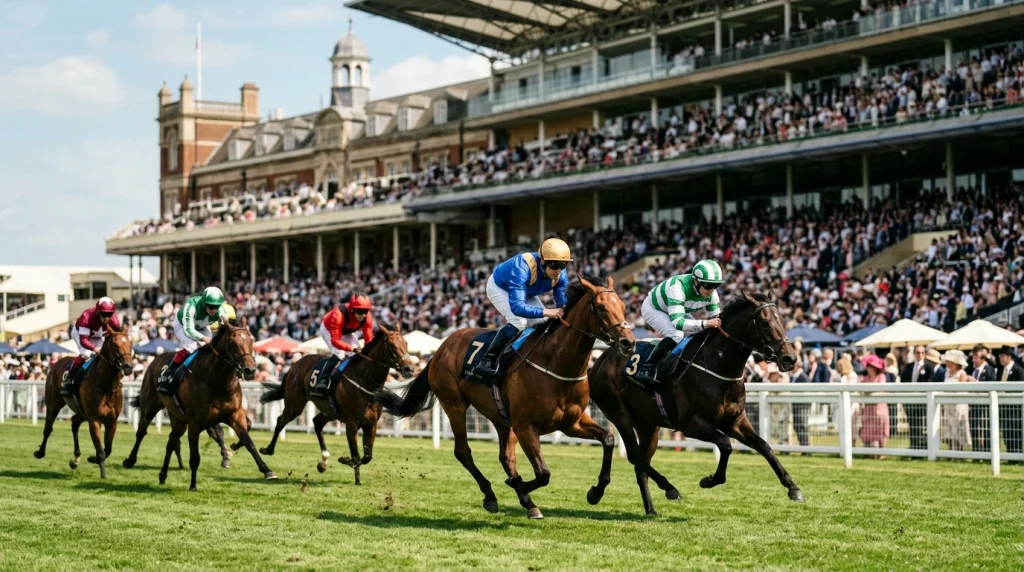
Ascot Race Turnover Statistics: Attendance Impacts on High-Stakes Liquidity
Royal Ascot’s marketing department loves the prize money number. Ten million pounds for the 2025 meeting. Ten million six hundred and fifty thousand for 2026. A King George VI and Queen Elizabeth Stakes upgrade to £2 million starting in 2027, which will make it the first £2 million race ever staged on British soil. The headlines write themselves. Felicity Barnard, the Ascot chief executive, said at the announcement that “we are delighted to be making these increases in prize-money for 2026, demonstrating our commitment to the sport and focus on rewarding participants.” It is good copy and it is true.
The figures that do not get framed are the betting volumes that sit underneath. Royal Ascot attracted 286,541 spectators across its five days in 2025, up 4.8% on the prior year. The combined Ascot prize fund across 2025 reached £17.75 million when you add the year’s other Ascot fixtures to the Royal Meeting. The 2025 record for British prize money across all of British racing was £194.7 million, according to the BHA’s annual racing report. Royal Ascot’s contribution to that total is a meaningful chunk, but it is the betting volume – which the racecourse does not publish – that determines whether the meeting remains the cornerstone of the British flat racing economy.
This is what the prize money looks like up close, where the volumes flow, and what the 2027 King George upgrade signals about the next phase of British flat racing’s economic model.
The 2025-2026 prize fund shift and what it represents
The £10 million Royal Ascot prize fund in 2025 represented a continuing upward trajectory from £8.5 million in 2023 and £9.6 million in 2024. The 2026 lift to £10.65 million builds on that base. Within the Royal Meeting itself, the Gold Cup, Prince of Wales’s Stakes, Diamond Jubilee and Queen Anne Stakes carry the largest single race prize money figures, with the Gold Cup and Prince of Wales’s both at £1 million in 2026.
The economics behind the increases run through a combination of sources. Ascot Racecourse’s commercial income – corporate hospitality, broadcasting rights, sponsorship – funds the substantial majority of the prize money pool. The HBLB levy contributes to certain race grants. Sponsorship by Qipco and other commercial partners adds layer-cake funding to specific races. The structure means the prize fund is not directly tied to betting turnover on Royal Ascot, but it is indirectly tied – broadcasting deals reflect viewership, which reflects punter engagement, which reflects betting turnover.
The increases for 2026 were announced in December 2025 alongside a broader commitment from the racecourse to grow the meeting’s economic footprint. The political subtext is the broader pressure on British racing from declining betting turnover and the regulatory headwinds covered elsewhere in these pages. Ascot’s position has consistently been to lead by example on prize money growth, partly to signal commitment to the sport and partly to attract international participation that justifies the meeting’s status.
The 2027 King George upgrade to £2 million sits alongside this trajectory but operates on a different mechanism. King George VI and Queen Elizabeth Stakes is run at Ascot’s July meeting rather than the Royal Meeting, but the £2 million figure makes it the largest single race purse in Britain. The signal is that Ascot’s prize money strategy extends beyond the Royal Meeting to anchor flat racing’s flagship summer fixture as well.
Signature races by stake volume
The races that attract the largest betting turnover at Royal Ascot are not always the races with the largest prize money. The pattern follows two parallel logics. Championship races attract international class fields and concentrated professional money. Open handicaps attract recreational and once-a-year volume that dwarfs the professional money on volume basis.
The Gold Cup on Thursday, the meeting’s marquee staying race, attracts strong professional and ante-post money but operates in a relatively small field – typically 10 to 14 runners – which concentrates the betting market on a few horses. The Diamond Jubilee on Saturday and the Prince of Wales’s Stakes on Wednesday share similar field-size constraints and a similar pattern of concentrated professional money.
The handicaps tell a different story. The Royal Hunt Cup on Wednesday and the Wokingham Handicap on Saturday are the meeting’s largest-field handicaps, often running 25 to 30 runners. These attract substantial recreational money – every casual bettor at the meeting has a fancy in the big sprint handicaps – and operate as the meeting’s volume races. Bookmaker liability across these races is substantial because the field sizes spread the each-way liability across many possible outcomes. Extra-place promotions concentrate on these races during the week, generating additional volume.
The Wednesday meeting overall, anchored by the Hunt Cup and the Prince of Wales’s, has traditionally been the heaviest single day of Royal Ascot betting turnover. The data is not published with full granularity, but bookmaker sources consistently report Wednesday as the largest day across the five, with Saturday closing the gap in recent years as the Wokingham programme has been built up.
Attendance and its betting effect
The 286,541 spectators in 2025 – up 4.8% on 2024 – is the visible measure of Royal Ascot’s commercial momentum. The average daily attendance of roughly 57,000 makes the meeting one of the few British sporting fixtures comparable in scale to a Premier League matchday across multiple days, and the underlying punter base translates directly into betting activity at on-course and remote operators.
The relationship between attendance and betting is non-linear. Attendees place bets, but the bigger effect comes from the broader audience that engages with the meeting because of its visibility. Television viewership in the UK across Royal Ascot week reaches several million across the major terrestrial broadcast slots, and many of those viewers are recreational punters who place bets on the marquee races without attending. The meeting acts as the focal point for British flat racing’s annual cycle of recreational engagement, and the betting volume around it dwarfs the volume at any individual race-day outside the festival weeks.
The 2025 attendance figure also reflects continued operational improvements at the racecourse. New seating, hospitality upgrades and the broader experience improvements have driven year-on-year attendance growth across several recent meetings. Felicity Barnard, after the 2025 meeting, said “it was a fantastic week and I’m thrilled that we’ve been able to be a window to the world for British racing.” The framing matters because Royal Ascot is one of the few British meetings with genuine international reach – the Australian, American, Hong Kong and continental European racing communities all engage with the meeting, and that international engagement feeds back into betting activity from outside the UK.
One footnote that often gets missed. Total British racing attendance in 2025 reached 5.031 million, the first time the figure has cleared 5 million since 2019. Royal Ascot’s 286,541 represents about 5.7% of that total, a substantial share concentrated on one meeting. Under-18 attendance grew 17% year on year to 211,447 across British racing, and Royal Ascot is a significant driver of family attendance during summer school holidays.
King George VI Chase and the 2027 two-million-pound milestone
The 2027 King George upgrade is the most consequential single prize money announcement in British flat racing in a decade. £2 million for a single race makes the King George the largest-purse race in the UK, surpassing the Derby, the Cheltenham Gold Cup, the Grand National and every other domestic fixture. The signal is that Ascot intends to anchor mid-summer flat racing in the same way the Cheltenham Festival anchors National Hunt championship racing.
The funding model for the upgrade combines Ascot’s commercial income with continued Qipco sponsorship and HBLB grant support for specific elements of the programme. The decision to invest at this scale reflects Ascot’s confidence that the meeting can attract international class fields capable of justifying the prize fund. The international competitive picture matters because £2 million in British prize money is now within range of the largest international flat race purses, which strengthens British racing’s ability to compete for top horses against the Breeders’ Cup, the Dubai World Cup carnival, and the Hong Kong international meetings.
The upstream effect on betting markets is harder to predict. Larger prize money attracts better-quality fields, which produces more competitive racing, which generates more sophisticated betting markets. The mid-summer King George has historically been a key trial for end-of-year programmes including the Arc and the Breeders’ Cup Turf. The £2 million upgrade should sharpen the trial role and the betting market that surrounds it, with concentrated professional money likely to grow in importance relative to the recreational base.
For five-figure punters working the British flat racing calendar, the King George is one of the handful of races where the betting market is deep enough and the field international enough to absorb large stakes without distorting prices. The 2027 upgrade should reinforce that property. The broader question is whether the prize money trajectory at Ascot is sustainable against the regulatory pressure on British racing’s broader economic base. The full picture of that pressure – where the levy yield depends, where black-market migration is shifting volume, where affordability checks are reducing turnover – sits at the centre of how British racing’s prize money pyramid will look in three to five years. For the broader structural picture of where the betting money flows in modern British racing, the turnover patterns across the Grand National and Cheltenham Festival tell the story alongside Ascot’s.
Which Royal Ascot race attracts the most concentrated high-stakes money?
The Gold Cup on Thursday and the Prince of Wales"s Stakes on Wednesday attract the largest concentrated professional and ante-post stakes because of their championship status and relatively small fields. The big-field handicaps including the Royal Hunt Cup and the Wokingham generate larger volume overall through recreational money, but the stake-per-bet figures on the championship races are typically larger.
Has the move to a £10.65 million purse changed the field quality at Royal Ascot?
Yes, particularly in the championship races. The increased prize money has attracted stronger international participation across the meeting, with Australian, American and continental European trainers targeting specific races. The mid-tier handicaps have seen more incremental quality improvement. The 2027 £2 million King George upgrade is expected to accelerate the international participation pattern further.
Articles
Published by the High-Stakes Horse Racing Betting team.
