
Betfair Exchange Liquidity vs Bookmaker Fixed Odds 2026
 Available in US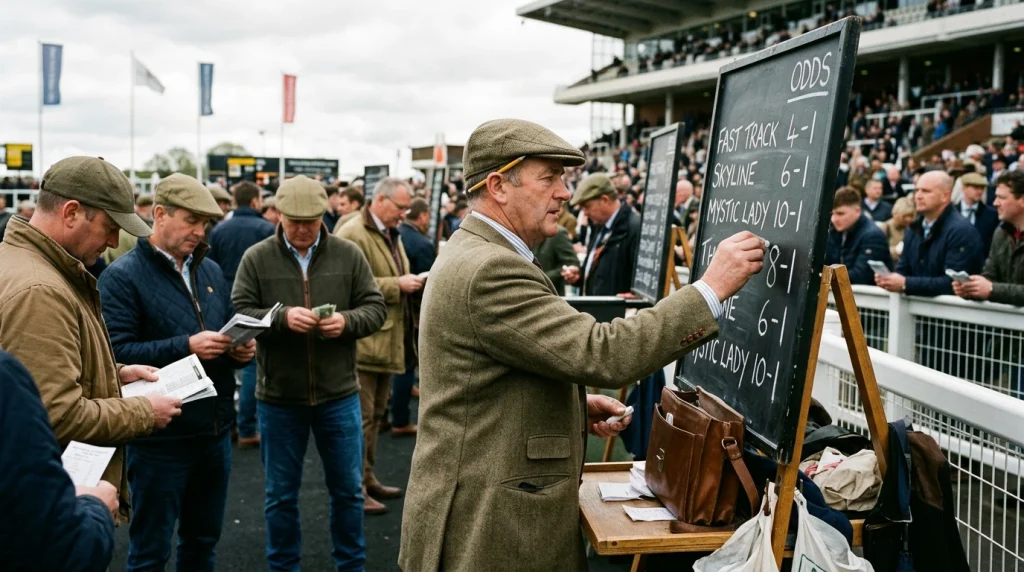
Placing Five-Figure Stakes: Comparing Exchange Depth and Fixed Odds
The horse was a 6/1 shot in a Saturday handicap at Sandown. I had built the position over three weeks of form work and felt comfortable with the stake size. The first fixed-odds bookmaker accepted £2,000. The second offered me £1,500 at 11/2 instead of 6/1. The third factored my stake to £600 and asked me to wait while the trading team reviewed the bet. I went to Betfair instead. I placed £15,000 to back at the available 13/2 lay prices. The order matched across roughly twelve seconds in three tranches, with an average matched price of 6.4 – better than every fixed-odds price I had been offered. The lesson was not that the exchange is always better. The lesson was that the exchange is the only place a £15,000 stake actually behaves like a £15,000 stake at advertised prices.
Fixed-odds bookmakers and exchanges are different products that look similar on the surface. The bookmaker is a trader who quotes a price and accepts the bet at that price (with caveats). The exchange is a marketplace where punters bet against each other and the platform takes commission on net winnings. For five-figure stakes the difference in behaviour is dramatic, and understanding it is the difference between executing positions cleanly and watching the market move against you on every attempted bet.
This piece is the working comparison. How each pricing model actually works, where liquidity lives across the trading day, and where large stakes actually clear at the prices on the screen.
How fixed-odds pricing works on the inside
The fixed-odds bookmaker’s price is set by a trading team that combines several inputs. The starting point is usually a tissue price – the trader’s internal estimate of fair odds based on form, going, weights and recent race patterns. The tissue is then adjusted for the bookmaker’s commercial position. If the trader expects the public to overweight a particular horse, the price is tightened relative to the tissue to discourage the public position. If the trader expects underweight, the price is lengthened to attract money.
The overround on a typical UK racing market is set by the bookmaker to a target margin, usually between 105% and 115% on the morning of the race. The margin compensates the bookmaker for the risk of standing the bet and for the operational costs of the business. Across the trading day, the price is adjusted continuously based on the flow of money – bets coming in on a horse cause its price to shorten, and the bookmaker rebalances the book by lengthening other horses’ prices.
The crucial feature of fixed-odds pricing for a five-figure punter is that the price on the screen is offered subject to acceptance. The bookmaker has the right to decline the bet at the offered price, to offer a smaller stake at the same price, or to offer the requested stake at a tighter price. The right to decline is exercised most often against accounts the trading team has identified as profitable, which is the stake-factoring problem covered elsewhere in these pages. For accounts that have not been flagged, the right is exercised mainly on outlier liability concentrations – late market moves on outsiders, large stakes on heavily backed horses, anything that creates a concentrated risk position for the bookmaker.
The result is that fixed-odds prices function as advertisements rather than firm offers at large stakes. A 6/1 advertised price is genuinely 6/1 for a £100 bet from an average customer. It is often something other than 6/1 for a £5,000 bet from a profitable account. The mismatch between advertised price and effective price is the single largest source of friction for serious punters in the fixed-odds market.
How exchange pricing works on the inside
The exchange operates on a fundamentally different model. There is no trading team setting a price. Instead, punters submit back orders (requests to bet on a horse at a chosen price) and lay orders (requests to take the other side of someone else’s back order at a chosen price). The platform matches back orders against lay orders. The displayed price for any selection at any moment is the best available back price (the lowest price a layer is currently offering) and the best available lay price (the highest price a backer is currently offering).
The spread between back and lay prices reflects the market’s collective uncertainty about the horse’s true probability. Tight spreads indicate confident market consensus. Wide spreads indicate divergent opinion or thin liquidity. The depth of the market – how much money is queued at each price level – determines whether a large stake can be matched without moving the price.
Standard commission on Betfair Exchange is 5% on net winnings. Smarkets charges 2%. Matchbook charges 2% for most users, with 0% commission promotions available at various times for top customers. The lower commission rates on Smarkets and Matchbook are partially offset by their generally thinner liquidity – the back-lay spread is wider, and large stakes are more likely to move the price.
Betfair processed roughly £84 billion in trades during 2025, up about 10% year on year. The figure puts the exchange’s annual volume comfortably above any single fixed-odds operator’s annual horse racing turnover. Most of that £84 billion flows through sports outside horse racing, but UK racing remains one of the deepest individual markets on the platform. Saturday afternoon racing markets often see total matched volumes of £500,000 to £2 million per race on the most heavily traded handicaps. The Cheltenham Festival generates matched volumes considerably above that on its championship races, and the Grand National can exceed £10 million matched on the race itself.
Liquidity by time of day across UK racing
The pattern of liquidity across the trading day has a consistent shape, and understanding it is the difference between executing at advertised prices and chasing the price as it moves. Markets typically open the night before or early morning of race day. The first wave of liquidity arrives in the morning between 8am and 10am, when professional punters and syndicates establish their primary positions. The midday period from 10am to 1pm is relatively quiet, with thin matching activity and prices drifting slightly as the morning’s flow gets digested.
The afternoon period from 1pm onwards sees the second major wave. Recreational money begins to flow as office hours wind down for Saturday racegoers, and the volume builds through the afternoon. The thirty minutes before each race produce the deepest single-market liquidity, with concentrated trading on the upcoming race generating the bulk of matched volume.
The final five minutes before the off are the highest-velocity trading window. Exchange spreads tighten substantially because matching opportunities are abundant. Fixed-odds prices respond to exchange movements with a slight lag, typically one to three minutes depending on the operator. For a punter placing a five-figure stake in the final five minutes, the exchange is almost always the cleaner execution venue because the matching is genuinely instant and the depth is at its day’s peak.
The exception is the day’s first race and last race. The first race typically has thinner exchange liquidity because professional money has not yet engaged at scale. The last race can also have thin liquidity because professional positions have already cleared earlier in the day. For midweek racing – Wednesday and Thursday handicaps outside the major Festival weeks – the entire day’s liquidity profile is suppressed compared to Saturdays. Some Wednesday markets on Class 4 handicaps see matched volumes below £50,000 across the entire day, which makes a £10,000 stake genuinely impactful on the prevailing price.
Where large stakes clear faster
The honest comparison is segment-specific. For Saturday handicaps on major UK tracks, the exchange typically clears large stakes at advertised prices faster than any fixed-odds operator. Betfair’s depth on a Saturday Sandown handicap is usually sufficient to absorb a £10,000 back bet on the favourite within seconds at the displayed lay price, and to absorb £25,000 to £50,000 within a few minutes at slightly worse average prices.
For midweek handicaps with thin liquidity, neither venue is ideal. The exchange’s matched volume is low enough that a £5,000 stake can move the market noticeably. The fixed-odds books typically have lower published limits on midweek handicaps and are more aggressive with stake factoring. The pragmatic approach for punters operating on midweek racing is either to scale stakes down to the available liquidity or to split the stake across multiple venues.
For the Festival weeks – Cheltenham, Royal Ascot, Glorious Goodwood, the Aintree Grand National meeting – the exchange’s depth reaches levels where five-figure stakes clear at advertised prices essentially instantaneously, and the fixed-odds books are willing to take larger stakes because the volume covers their liability. Both venues are functional during peak weeks, and the choice between them depends more on the specific operator’s terms and the punter’s account standing than on raw liquidity.
For ante-post markets on the major championship races – Gold Cup ante-post twelve weeks out, Grand National ante-post in October – the exchange typically has the deepest liquidity earliest because the platform attracts professional punters who build long positions over time. Fixed-odds bookmakers accept ante-post bets in size but are more conservative about extending generous prices on outsider positions. As Martin Dixon wrote in Racing Post recently, “flimsy markets, affordability checks and bookmaker restrictions have reduced the volume of opportunities for a successful bettor, but I take the view that it’s more important than ever to be adaptable with your thinking given the volatility of the markets at different points through the day.” That adaptability – knowing when to use the exchange and when to use fixed-odds – is the most consistent edge available to a serious punter in the current market.
For the specific complications of trading large positions on Betfair’s exchange – Premium Charge tiers, commission calculations, syndicate practice – the working detail of where bookmakers will and will not accept stake size sits inside the same conversation about effective rather than advertised pricing.
How does Betfair"s £84 billion 2025 turnover compare to single-bookmaker volumes?
Betfair"s £84 billion annual trade volume spans all sports and exceeds the horse racing turnover of any single UK fixed-odds operator. Comparing like for like is difficult because operators do not all publish horse racing turnover separately, but Betfair"s UK racing depth on Saturday afternoons typically clears stakes that would be factored at every major fixed-odds book.
At what stake size do fixed-odds quotes typically get factored?
The threshold varies by operator and by account. Established accounts not yet flagged for restriction can typically place £2,000 to £5,000 win-only bets at advertised prices on most Saturday handicaps. Stakes above £5,000 routinely produce some form of trader intervention – partial acceptance, tighter price, or factoring. Profitable accounts often see factoring on stakes below £1,000.
Articles
Written by the editors at High-Stakes Horse Racing Betting.
