
Epsom Derby Market Trends and High-Stakes Sizing 2026
 Available in US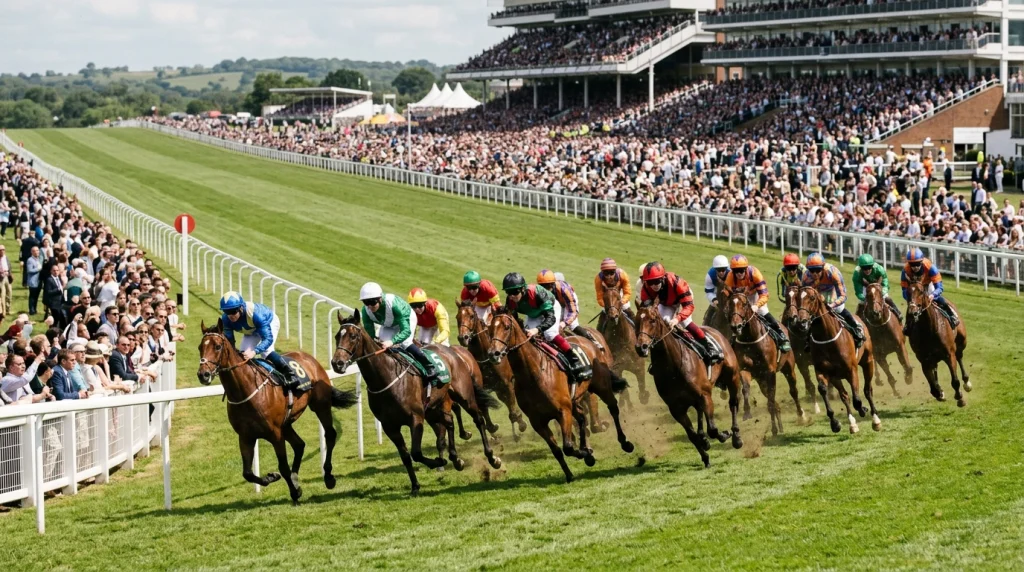
Derby Trial Performance: Analysing Epsom Betting Volume and Value
I had a Derby ante-post position on a horse who looked the obvious winner after the Lingfield Derby Trial in early May. The horse had won by three lengths on the bridle, the time was good, the trip looked tailor-made. I took 4/1 the Saturday after Lingfield. By the Tuesday morning before Epsom, the price had drifted to 11/2. I checked the news. Nothing. The trainer was speaking confidently. The work reports were positive. I called a colleague who works for a major operator’s trading team and asked what they were seeing. The answer was a sentence I have never forgotten. The smart money does not bet Derby winners on Lingfield trials. The smart money waits for the Dante.
The Epsom Derby is the most heavily traded three-year-old flat race in the British calendar and the market microstructure is genuinely different from any other race. The field is composed almost entirely of horses that have not yet run over a mile and a half, on a track no horse in the field has ever seen, with a unique combination of camber, gradient and distance. The information advantage available to professional money is more concentrated on the Derby than on almost any other race because the public has less form to work from and the professionals have more sophisticated tools to assess pedigree, training reports and trial form.
This piece is the working map. How the Derby market builds across the spring, where the trial races sit in the pricing hierarchy, how the going at Epsom interacts with the standard form book, and where the big stakes find liquidity in the days before the race.
The trial race hierarchy and what the market actually weights
The Derby trial calendar runs through April and May with a half dozen races that historically point at Epsom. The Greenham Stakes at Newbury in mid-April, the 2000 Guineas at Newmarket on the first weekend of May, the Lingfield Derby Trial on the second weekend of May, the Dante Stakes at York in mid-May, and the Chester Vase at the May Chester meeting are the five most important trials. Each carries different weight in the professional money’s calculations.
The market weights the Dante Stakes most heavily. The York mile-and-two-and-a-half-furlong trial is run on a galloping track that suits stamina, the field is consistently competitive, and Derby winners have repeatedly come through the Dante in recent decades. A horse winning the Dante typically tightens substantially in the Derby market within hours of the result. A horse running well but not winning at York can also shorten if the time, sectional pattern and visual impression suggest the horse has more in reserve.
The Lingfield Derby Trial is weighted less heavily despite its specific positioning as a Derby trial. The Lingfield track is left-handed (Epsom is left-handed), the trip is identical to the Derby (a mile and a half), and the camber is sufficiently similar to make Lingfield form genuinely relevant. The catch is that Lingfield’s surface is faster than Epsom on most days, the field is typically smaller, and the trial does not always sort the field in the same order Epsom will.
The Chester Vase is the third most important trial. Chester’s tight course is genuinely different from Epsom’s wide-open downs, but the cambered finish at Chester acts as a useful test of stamina in close finishes and the time figures usually offer a clean read on a horse’s class. The 2000 Guineas serves as a Derby trial mainly for horses thought to stay further than the mile of the Newmarket Classic, and the market interpretation of Guineas form for Derby purposes is genuinely difficult – a horse beaten three lengths in the Guineas might be a Derby winner if the trip stretches them, or might be the Guineas horse showing they did not stay properly.
How the Derby market builds across spring
The market shape across the spring follows a consistent pattern. Through April, the prices on the leading three-year-olds reflect the previous autumn’s juvenile form, the spring’s early reappearance runs, and ante-post speculation on which horses will target Epsom. The Greenham Stakes in mid-April is the first market-moving spring trial, and the result can produce double-digit percentage price moves on the involved horses.
May is the key month. The 2000 Guineas on the first weekend, the Lingfield Trial on the second weekend, and the Dante Stakes plus Chester Vase on the third weekend produce three successive market-moving events. Each result produces a shift in the Derby market, and the cumulative shift across May typically reshapes the favouritism completely. The horse leading the market in early April is rarely the favourite by late May.
The week of the race itself sees the final wave of money. NRNB protection on the Derby typically opens about four weeks before the race, slightly tighter than the six-week Cheltenham window because the Derby field is smaller and the runners are fewer. The protection is the moment ante-post liquidity tightens substantially because punters who have been holding traditional ante-post positions can roll over into NRNB-protected positions without survivorship risk.
The peak of pre-race trading happens between Tuesday and Friday of Derby week. Saturday morning is the heaviest single trading window in any year, with the bulk of recreational money entering the market in the four hours before the off. Exchange liquidity on the Derby reaches levels where five-figure stakes can clear at advertised prices, with Betfair Exchange’s £84 billion 2025 trading total – up about 10% year on year – providing the depth on the day itself.
The Epsom course factor
The Derby is run over a track no horse in the field has previously seen. Epsom’s mile-and-a-half course features a sustained climb in the first half-mile, a sharp downhill turn at Tattenham Corner, and a cambered downhill straight that runs unusually camber-affected for the final two and a half furlongs. The track punishes horses that cannot handle camber, horses that cannot recover after the downhill stretch, and horses that act poorly on the unique surface composition of the downs.
The professional money pays heavy attention to whether a horse’s action and physique suggest it will handle Epsom’s specific conditions. A horse with a strong, action-oriented stride pattern who is comfortable on undulating ground is typically priced shorter in the Derby market than its form alone would suggest. A horse who is brilliant on level tracks but who appears to need a true galloping surface is typically priced longer. The market reads these factors through trainer interviews, pedigree analysis (Epsom’s downs reward certain bloodlines reliably), and visual inspection of work reports.
The going at Epsom on Derby day matters disproportionately for the Derby itself. Good to firm produces a faster surface that suits horses with finishing kick. Good or good to soft suits stayers and produces results closer to true galloping form. The published going stick reading on Derby morning is one of the most analytically important data points in the entire flat racing calendar because it shifts the relative chance of every horse in the field meaningfully.
British racing’s overall picture has been one of pressure on turnover. Total betting turnover on UK racing dropped 9% year on year in early 2025 and average turnover per fixture fell 14.4% on core fixtures. The Derby remains an exception. Epsom’s Derby Day pulls some of the most concentrated recreational money in the British flat calendar and the betting volume on the race itself has held up well compared to the broader trend. Bookmakers’ liability concentrates on the favourite and the second favourite, and the marginal stake limits on the Derby are typically tighter than on equivalent handicap fields.
Stake liquidity and the Saturday afternoon
The practical reality of placing five-figure stakes on the Derby is that the major UK bookmakers will accept substantial early prices in the week before the race, will accept substantial morning-of-race prices on Saturday, and will accept SP-based bets on Saturday afternoon. The published maximum stakes are typically higher on the Derby than on a Saturday handicap because the bookmakers know the volume is sufficient to absorb their liability.
The exchange provides the deepest single venue for unrestricted Derby trading. Betfair, Smarkets and Matchbook all carry significant Derby liquidity in the final 24 hours before the race, with five-figure stakes clearing on the favourite essentially instantly at advertised prices in the final hour before the off. The exchange’s commission structure of 5% on Betfair, 2% on Smarkets and 2% on Matchbook applies to the Derby the same way it applies to any other race.
For ante-post stakes earlier in the spring, the picture is more nuanced. Liquidity is genuinely thin in April when the spring trials have not yet been run. Five-figure ante-post stakes on the Derby in April need to be split across multiple operators or worked into the exchange in tranches. By mid-May the liquidity improves substantially and large stakes can be placed in a single transaction on either fixed-odds books or the exchange.
British racing 2025 set a record for prize money at £194.7 million across the year, with attendance reaching 5.031 million for the first time over 5 million since 2019 and under-18 attendance up 17% to 211,447. The Derby’s prize money contributes a meaningful chunk of the total. The Derby itself currently carries roughly £1.5 million in total prize money, with £850,650 to the winning connections. The figure puts Epsom’s flagship race firmly in the top tier of British racing economics, comparable to the Cheltenham Gold Cup at £625,000 (£351,687 to the winner) and below the King George VI and Queen Elizabeth Stakes at Ascot which is set to reach £2 million from 2027. The Derby’s market depth reflects that prize money concentration, and the structural patterns of money movement around the race echo the patterns described elsewhere – particularly the way the festival turnover patterns shape the broader British flat racing economy.
Which Derby trial race carries the most weight with professional punters?
The Dante Stakes at York in mid-May is the most heavily weighted trial. The track suits stamina, the field is consistently competitive, and Derby winners have repeatedly come through the Dante in recent decades. The Lingfield Derby Trial is weighted less despite using the same trip and direction as Epsom because the Lingfield surface and configuration do not produce identical results to Epsom.
When does NRNB protection open on the Derby market?
NRNB protection on the Derby typically opens about four weeks before the race, slightly tighter than the six-week Cheltenham window. The timing reflects the smaller Derby field and the fact that most prospective runners have established spring form by mid-May, reducing the survivorship risk that NRNB is designed to address.
Articles
Published by the High-Stakes Horse Racing Betting team.
