
Glorious Goodwood Handicap Sizing and Draw Bias Strategies
 Available in US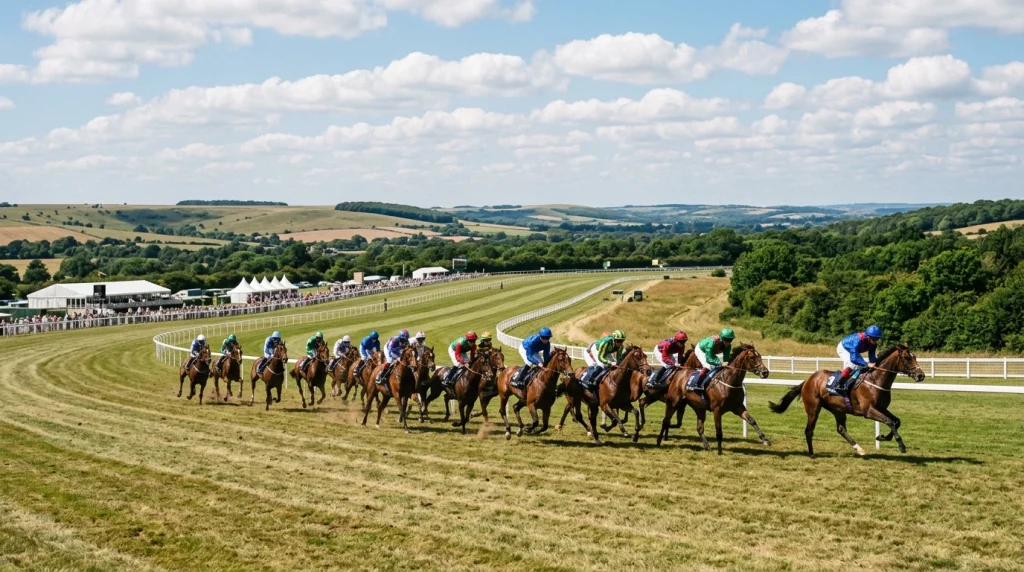
Stewards Cup Betting Models: Factoring Ground Conditions and Bias
I had spent two weeks building a Stewards Cup model that used eleven form variables and produced a fair-price list. The model rated a horse at 9/1 that the bookmakers had at 16/1. I backed it for £800 each-way. The horse ran a fine race on its merits and finished sixth. The horses that finished first, second, third and fourth all came from the stands’ side of the draw. My horse was drawn far side. The model had assigned a 5% adjustment for draw bias on the Stewards Cup sprint course. The actual effect of the draw that afternoon was closer to 35% advantage to the high numbers. The lesson was permanent. At Goodwood, the draw is not a tiebreaker. The draw is the headline variable.
Glorious Goodwood is the second-largest flat racing festival in the British calendar, and its character is genuinely different from Royal Ascot or the Cheltenham Festival. The Sussex downs course is one of the most idiosyncratic tracks in Britain – undulating, cambered, with a tight finishing straight that produces results substantially different from level galloping tracks. The five-day meeting in late July and early August attracts top international fields for its championship races and produces some of the strongest handicaps of the year for the betting markets to digest.
This piece is the working strategy guide. How the draw bias actually operates on the Stewards Cup sprint course, why the going on the downs matters differently than on other tracks, where the big stakes find liquidity, and which championship races concentrate professional money.
The Stewards Cup draw bias and how to read it
The Stewards Cup is the meeting’s centrepiece handicap, a six-furlong sprint with maximum field of 28 runners. The race is run on the downs straight which has a pronounced camber towards the stands’ side rail. Horses drawn high (closer to the stands’ side) benefit from the camber’s lateral pull. Horses drawn low (on the far side) have to work harder against the camber to stay on a true line, and they typically tire more in the closing stages.
The draw bias varies year to year based on the going stick reading and the wind direction. On firm ground, the camber’s effect is stronger because horses can use the rail’s gravitational pull. On soft ground, the bias diminishes because horses on softer surfaces are running closer to the line they choose rather than the line the camber suggests. The wind matters because Goodwood’s downs is exposed to weather coming off the Channel, and a strong tailwind down the straight changes the pace pattern of the race in ways that the camber alone does not produce.
The bookmaker’s odds adjustment for draw bias is usually modest. Most operators tighten the prices of high-drawn horses by between 5% and 15% in the days before the Stewards Cup, with the adjustment reflecting a default assumption about going and wind. If the going stick reading on Saturday morning suggests firmer ground than expected or the wind is stronger than usual from a tailwind direction, the bias is stronger than the bookmaker’s adjustment implies and a serious punter has a genuine edge in backing high-drawn horses at prices that have not been fully adjusted.
The bias also matters more in some pace patterns than others. A race that develops with the front-runners hugging the stands’ side rail in the early furlongs concentrates the rest of the field on the higher drawn horses’ pace. A race that develops with the front-runners going wide and leading the field to the far side rail produces a different pace pattern that can reduce the high-draw advantage. Reading the Stewards Cup is partly reading the pre-race draw discussions among trainers and partly watching the jockeys’ positioning in the first furlong.
The other key Goodwood races and what professional money targets
The Sussex Stakes on Wednesday is Goodwood’s championship mile race and attracts professional money in concentrations comparable to the Royal Ascot Group 1 races. The Sussex is run on a mile course that includes a sharp descent in the early furlongs and a rising finish, which produces a pace pattern that suits horses with both speed and stamina. The race typically produces betting markets where the favourite is well backed and the second-tier of the field is genuinely competitive at attractive prices.
The Goodwood Cup on Tuesday is the meeting’s two-mile stayers’ championship. The race usually has a small field of high-class stayers and produces betting markets where the headline favourites carry concentrated professional money. The longer the trip, the more the meeting’s idiosyncratic terrain matters – the downs ride genuinely harder than a level track over two miles, and horses with proven stamina on undulating courses are heavily favoured over horses with stamina built on level tracks.
The Nassau Stakes on Thursday is Goodwood’s championship for fillies and mares. The race has historically attracted some of the strongest competitive Group 1 fields of the British year and produces betting markets where late professional money substantially shapes the SP. The pre-race trading window on Nassau day is one of the more interesting tactical betting opportunities in the British flat calendar because the field quality is high enough to produce competitive races but the recreational money does not concentrate as heavily as on the Stewards Cup.
The handicaps across the five days are where the bulk of betting volume sits. The Goodwood Stakes, the King George Stakes, the Lennox Stakes (now the Lennox Stakes is a Group 2), and the various less heralded handicaps across the week produce substantial betting volumes because the festival’s structure encourages punters to play across the card rather than concentrating on individual races. The Cheltenham 2025 figures showed all 28 of its races inside the top 31 most-staked races of the year in Britain – Glorious Goodwood typically delivers similar concentration of betting volume on its own races, with all eight of its key handicaps and championship races sitting comfortably within the British top 60 by turnover.
Goodwood’s going and how it shifts the form book
Goodwood’s downs course produces going readings that interact with the camber in ways no other British track replicates. The going stick reading at 8am on Saturday morning matters substantially more on Goodwood Saturday than on an equivalent Sandown Saturday because the going at Goodwood determines whether the camber bias is severe or moderate. A firm reading produces sharp camber bias. A soft reading produces moderate camber bias. The same horse drawn on the far side has a different real chance under different conditions.
The complication is that the going on the downs can be uneven across the track. The stands’ side rail typically dries faster than the centre of the straight on warm days because of wind exposure. The far side can hold moisture longer because of less direct sunlight in certain weather patterns. A published going stick reading of “good” might genuinely mean good on the stands’ side and good to soft on the far side, which compounds the draw bias for high-drawn horses.
The professional approach to Goodwood form requires separating going analysis from form analysis. A horse who has shown brilliant form on level tracks at Newmarket or Sandown may not transfer to Goodwood without specific evidence that the horse can handle camber. A horse who has shown moderate form at level tracks but has produced one or two strong performances on undulating courses may transfer to Goodwood at substantially better than its raw form-book figures suggest.
Across the broader British racing picture, total betting turnover dropped 9% year on year in early 2025 and average turnover per race fell 8% according to HBLB analysis. Glorious Goodwood has held up well against the trend because the festival format attracts both recreational and professional money in volumes that the day-to-day calendar cannot match. The HBLB’s pledged £93 million towards prize money and integrity functions in 2024-25 includes a meaningful contribution to Goodwood’s prize money structure, and the meeting’s economics remain healthy compared to the structural pressure on midweek racing.
The Stewards Cup workflow for a five-figure stake
The practical workflow I use for a Stewards Cup position runs across the week before the race. By the Tuesday before the Saturday, I have built a tentative selection list based on the pre-draw form analysis. On the Wednesday, when the draw is announced, I reweight every horse for its specific draw position relative to my expected camber bias and recalculate fair prices. By the Thursday, I have a final selection list of three to five horses across the field, with stakes pre-calculated for various going stick scenarios.
Friday is the working day. The going stick reading at 8am sets the headline assumption for Saturday’s race. If the reading suggests firm ground with strong camber bias, the selections concentrate on high-drawn horses with positive form indicators. If the reading suggests softer ground with moderate bias, the selections spread across both sides of the draw with the higher-rated horses getting larger stakes regardless of draw.
Saturday morning brings the final variables – overnight rainfall, wind direction, the 8am going stick reading. The position is finalised and the bets are placed across multiple operators if the stake is large enough to require splitting. Exchange liquidity on the Stewards Cup is among the deepest single-race markets in the British flat calendar, with five-figure stakes clearing essentially instantly on the exchange in the final two hours before the off.
The interaction between draw, going and SP is complex enough that the professional punter typically focuses on early prices rather than SP. Backing a horse at 14/1 in the morning that finishes second-favourite at 8/1 at SP is a substantially better trade than waiting for SP and getting 8/1. The BOG promotions on the Stewards Cup typically have caps that make the calculation meaningful for stakes up to £5,000 each-way at most major operators. For larger stakes, the cap-free portion settles at the morning price and the cap-affected portion settles at the bigger of morning price and SP, which is the same maths discussed in detail in the working tour of BOG caps at large stakes.
How strong is the draw bias on the Stewards Cup at Glorious Goodwood?
The bias varies year to year with going and wind. On firm ground with a stands" side tailwind, horses drawn in the top half of the field (numbers 14 to 28 in a 28-runner field) have historically had a substantial advantage. On soft ground or with cross-winds, the bias moderates. Professional punters adjust their fair prices by roughly 10 to 35% depending on the going stick reading and the weather pattern.
Why does Goodwood"s going matter more than at other tracks?
The downs course at Goodwood combines a cambered straight with undulating terrain, and the going determines whether the camber"s effect on the running line is strong or moderate. Firm ground amplifies the camber bias. Soft ground reduces it. The interaction between going and draw makes the Saturday morning going stick reading one of the most analytically important data points in the British flat racing calendar.
Articles
Written by the editors at High-Stakes Horse Racing Betting.
